

More than 30 years after making history, the women at the heart of MIGHTY MARY are finally getting their story told. The documentary revisits the groundbreaking 1995 America’s Cup campaign, when an all-women’s team went head-to-head with some of the world’s top male sailors and defied expectations along the way. In this conversation, director Mary Mazzio reflects on the team’s remarkable journey, the lasting impact of their victory, and why their story of resilience, teamwork, and challenging barriers remains especially relevant today.

What was it about the story of the first all-women’s America’s Cup team that convinced you it needed to be told now, more than 30 years after these events took place?
I first became aware of the Mighty Mary story back in the 1990s as several of my teammates from the 1992 Olympic Rowing Team had hopped aboard the team as grinders. It is a story of determination, courage, and a powerful retrospective on what happens when people challenge expectations. Given where we are as a country, highly partisan and fraying at the seams, I felt that a story that showcased a groundbreaking group of women defying the impossible would be so timely and resonant today. The power of teamwork and resilience is a testament to the enduring power of sport to unite us.
The women in MIGHTY MARY were initially dismissed as a publicity stunt, yet they went on to defeat one of the sport’s biggest legends. As you uncovered their journey, what surprised or moved you most about what happened after that historic victory?
First - having competed at the Olympics with the grinders aboard Mighty Mary, I knew they were badass and strong, but I did not fully appreciate the level of physicality that was required to hoist hundreds of pounds of sails and to maneuver a 55,000-pound boat. From a sheer strength standpoint, the fact that these women took down the King - legendary Dennis Conner (“Mr. America’s Cup”) with his star-studded team is remarkable. Billie Jean King laid down a marker in the 1970s that women could physically rise to the challenge, but her opponent was a 40-something-year-old tennis-hack. Fast forward to 1995, and this group of women brought Billie Jean’s legacy dramatically forward by going toe-to-toe with the finest male athletes on the planet. What an incredible David-and-Goliath undertaking. The other thing that I found so powerful was the willingness of the men involved in this campaign to not only participate but to be so thoughtful and honest in their perspective of the women, then and now. The men brought so much nuance to this project, and when one of the sailors said, “as we evolve, we need to move away from what our fathers taught us and lean into what our sons are learning”... the hair on the back of my neck stood up. Such a powerful notion of allyship and openness to learning.
You’ve built a career telling stories that challenge systemic barriers and elevate overlooked voices. How does MIGHTY MARY fit into that larger body of work, and what themes continue to draw you as a filmmaker?
MIGHTY MARY brings me full circle, in many ways, as my very first film, A HERO FOR DAISY, was about challenging structural barriers for women in the world of sport. Since my first film, ordinary people doing remarkable things (and stories from communities that are not often showcased) have resulted in startling change. Whether it was a HERO FOR DAISY, which resulted in a US Supreme Court case filed by high school female athletes, to UNDERWATER DREAMS (undocumented high school boys which defeated MIT in a sophisticated underwater robotics competition) which raised over $100 million dollars with the Obama White House, to I AM JANE DOE (accountability for online harm) which catalyzed bi-partisan federal legislation under the Trump White House. Our goal, with these incredible stories of overcoming obstacles, is to move people to action… especially those who hold the levers of power in this country. Our work has brought unlikely people together to solve a problem - and that is most exciting to me… when a story has the power to move people, on a human level, rather than a political level, to action.
As both an Olympian and an award-winning documentarian, you bring a unique perspective to sports storytelling. How did your own experiences as an athlete shape the way you approached this film and the women at its center?
Many stories about female athletes often omit the sheer strength, endurance, and grit required to prepare for battle, whether it is a race or on the field of play. For me, what was exceptional about this group of women is that they defied expectations and, in so doing, can inspire the next generation to tackle things that may seem remote or unlikely. The lessons learned from exploring the outer limits of what is physically possible bring an athlete to understand the power of concentration and swallowing fear. Not everyone who pursues sport will become an Olympian or world-class athlete, but equipped with the lessons of sport (leadership, endurance, going into the pain-cave, learning not to quit, visualizing success), that person may, years later, find the cure for cancer or become a leader in their own community.
The documentary arrives at a moment when women’s sports are experiencing unprecedented attention and investment. What do you hope audiences take away about the progress that’s been made, and the work that still lies ahead?
We are at a watershed moment with excitement about women’s sports, and that, in and of itself, is long overdue. That being said, scholarship opportunities, as well as coaching opportunities for women, are still not equal, nor is press coverage of some of the most exciting things happening in the world of women’s sports. The wheels of change sometimes grind slowly, but it is exciting to witness forward momentum. There is much work that lies ahead from an opportunity standpoint as well as old tropes about what it means when a woman might be physically more capable than a man. To quote one of the more famous male sailors in MIGHTY MARY, “we had everything to lose.”
After spending years bringing this story to the screen, what do you hope these women finally receive from MIGHTY MARY, whether it’s recognition, validation, or a rewritten place in sports history?
MIGHTY MARY is a hidden gem of history, and all the more remarkable because it is one of the very rare instances where a team of women went head-to-head against the best men’s teams in the world. The women of MIGHTY MARY wore Rosie-the-Riveter T-shirts throughout their campaign entitled: “WE CAN DO IT.” Sometimes just the act of believing, even when the stakes are inconceivably high and the chance of success non-existent, can result in extraordinary results. Every human is capable of this.
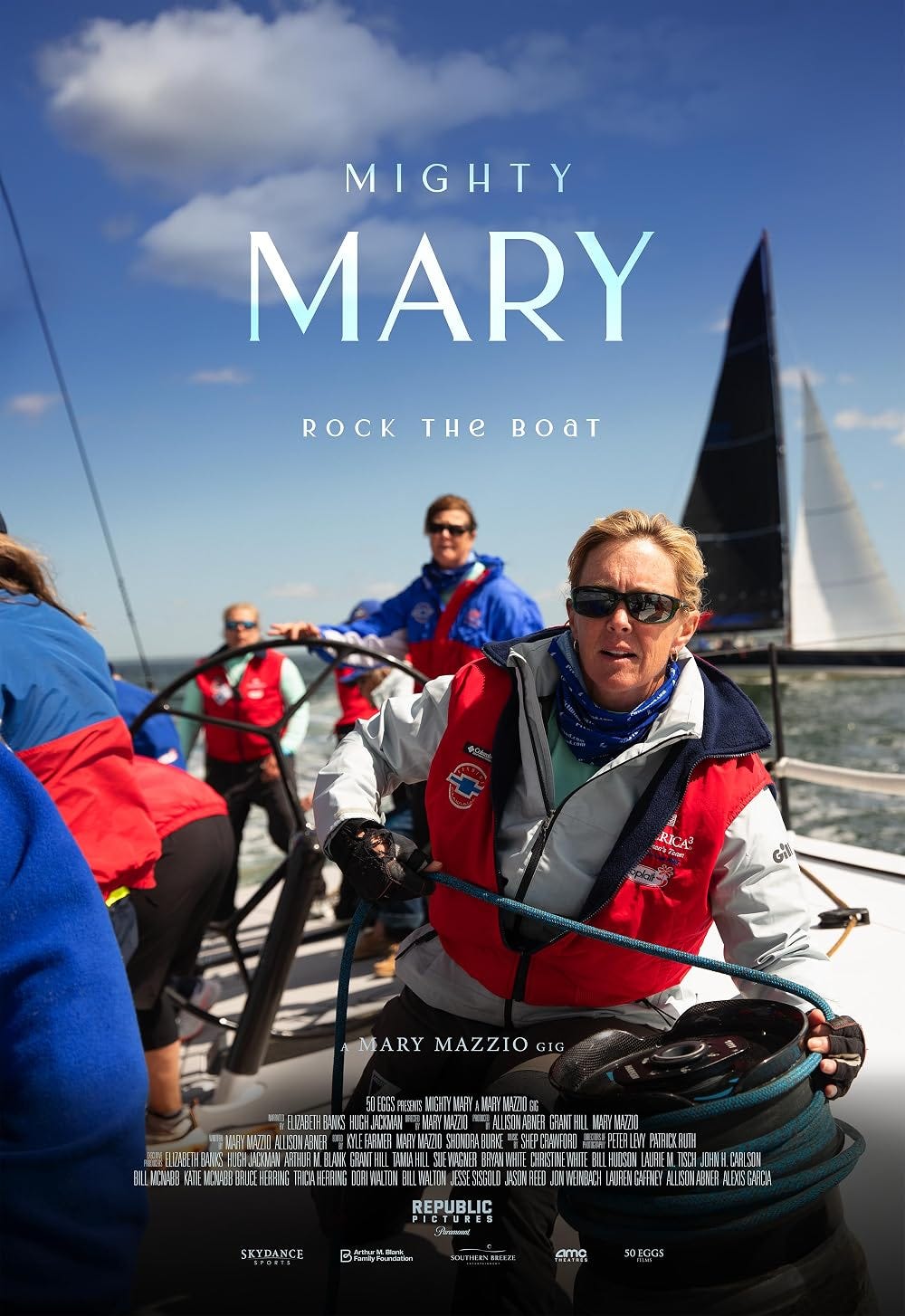
In select AMC Theatres, September 11, 2026